
What to Look for in a Print Shop for Your Branded Merchandise Needs
Discover how to choose the right print shop for custom branded merchandise in Australia — tips on quality, turnaround, and value.

Written by
Amara Okafor
Branding & Customisation
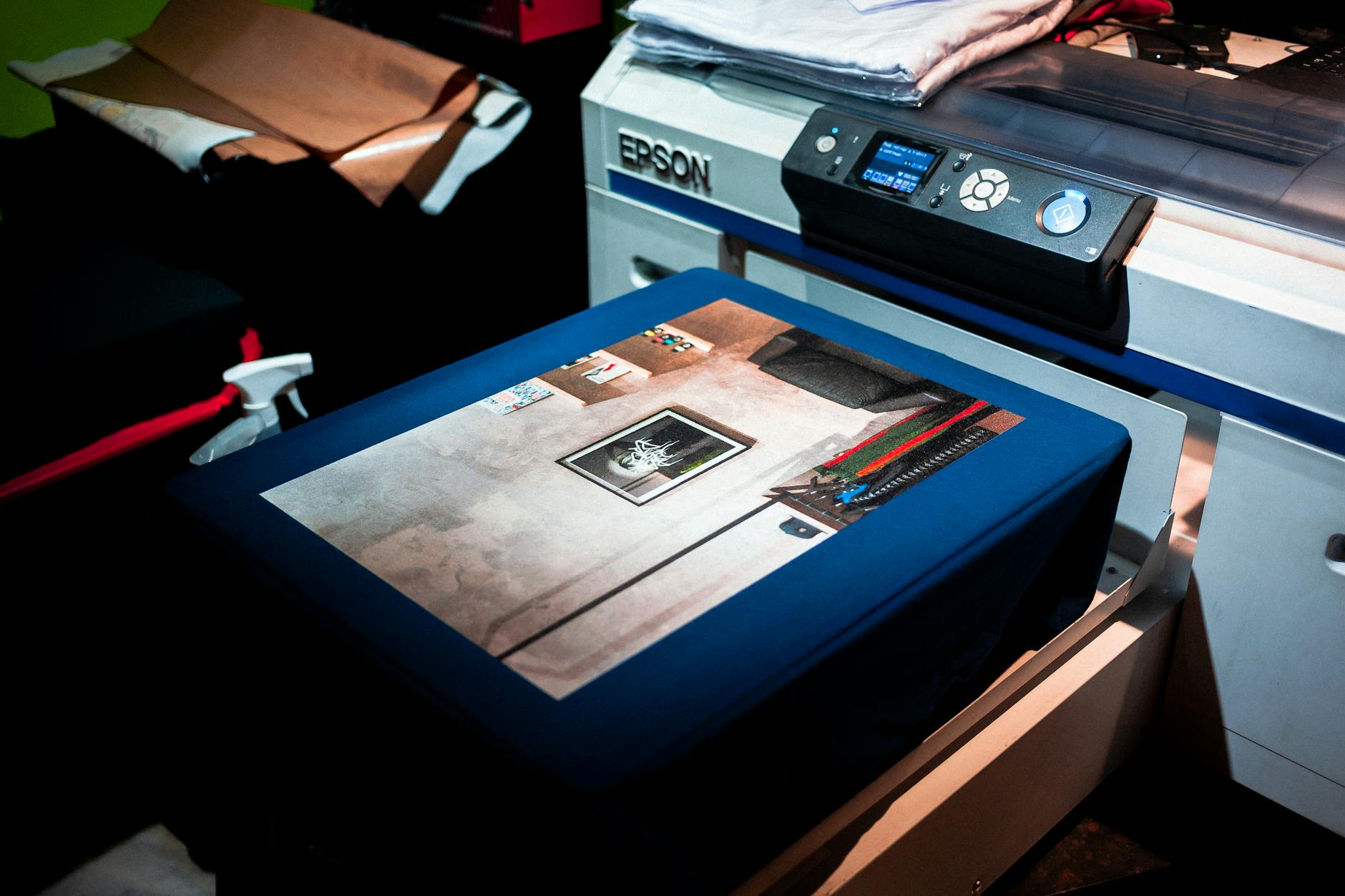
Choosing the right print shop for your branded merchandise can feel overwhelming — especially when the quality of your finished products directly reflects your organisation’s image. Whether you’re a marketing manager in Sydney coordinating corporate gifts for a major client, a sporting club in Brisbane ordering new training apparel, or a small business in Melbourne putting together a promotional pack for a trade show, the print shop you partner with will make or break your results. In this guide, we’ll walk you through everything you need to know to make a confident, informed decision.
What Does a Print Shop Actually Do?
The term “print shop” covers a surprisingly broad range of services. Traditionally, it conjured images of business cards and flyers — but today’s print shops (especially those specialising in branded merchandise) offer a far more comprehensive suite of products and decoration techniques.
A modern promotional print shop can help you produce:
- Custom apparel — t-shirts, polos, hoodies, caps, and hi-vis workwear decorated with your logo
- Branded drinkware — keep cups, water bottles, and mugs for corporate gifting or events
- Promotional stationery — promotional notebooks with logo, branded pens, and lanyards
- Tech accessories — USB-C to USB-C cables, power banks, and phone accessories
- Eco-friendly products — reusable water bottles, reusable drinking straws, and sustainable merchandise
The decoration methods used depend entirely on the product and your requirements. Screen printing, embroidery, sublimation, pad printing, laser engraving, and debossing all serve different purposes — and a quality print shop should be able to advise you on which method best suits your artwork and product.
Key Factors to Evaluate When Selecting a Print Shop
Not all print shops are created equal. Before you commit to a supplier, it pays to assess them across several critical areas.
Print Quality and Decoration Expertise
The most important factor is, of course, quality. Ask prospective suppliers about the decoration methods they use in-house versus those they outsource. In-house capabilities generally mean better quality control, faster turnaround, and fewer chances for errors to creep in between processes.
For custom apparel orders — say, a Perth sporting club needing sublimated training jerseys — it’s worth understanding whether the supplier has direct sublimation capabilities or whether they’re sending work elsewhere. Our guide to sublimation garments explains the technique in detail and is worth reading before you brief any supplier.
Minimum Order Quantities (MOQs)
MOQs are one of the first questions to ask any print shop. Some suppliers require minimums of 50, 100, or even 250 units per product before they’ll accept an order — which can be challenging for smaller organisations or one-off events.
If you only need a small run, look for suppliers that cater to low-volume orders. For example, small quantity custom lanyards are available from certain specialist suppliers, which is great news for schools, community clubs, and small businesses that don’t need hundreds of units at once.
Turnaround Times and Rush Orders
Turnaround time is critical — particularly if you’re ordering for a fixed event date or product launch. Standard turnaround for most branded merchandise in Australia is typically 10–15 business days from artwork approval. Rush orders are often available but come at a premium.
Factors that affect turnaround include:
- The complexity of your decoration (embroidery takes longer than a simple pad print)
- Whether you require a physical sample before production
- Stock availability for the base product
- Proof approval time on your end
Always factor in shipping time to your location. A Melbourne-based print shop may quote 10 days production, but if you’re based in Darwin or Hobart, add a few more days for freight.
Artwork Capabilities and File Requirements
A reputable print shop will be upfront about artwork requirements — typically vector files (AI, EPS, or PDF) for screen printing and embroidery, and high-resolution images (300dpi or above) for digital methods. Be wary of suppliers who accept low-resolution artwork without flagging potential quality issues — this is often a sign of a less professional operation.
Ask whether they offer artwork services or design support if your files aren’t print-ready. Some suppliers include basic artwork setups in their pricing; others charge separately. Getting this clarified upfront prevents unexpected costs.
Pricing, Setup Fees, and Bulk Discounts
Print shop pricing structures can vary enormously. Most suppliers charge a setup fee per colour, per position — which means a five-colour logo screen printed on a t-shirt will attract a higher setup cost than a one-colour print. These setup fees are a one-off cost per order, so the more units you order, the more the fee is spread across each item.
Understanding promotional products branding costs and how bulk pricing tiers work is essential before you request a quote. Most print shops offer tiered pricing — for example, 50 units at one price, 100 at a lower per-unit rate, 250 lower again. If you’re close to a pricing threshold, it’s often worth increasing your order to access the next tier.
For businesses looking at wholesale options — particularly for drinkware — our resource on wholesale branded water bottles in Australia is a useful reference point.
What to Ask Before You Place an Order
Once you’ve shortlisted a print shop, ask these questions before committing:
- Do you offer physical samples before bulk production? Particularly important for high-value orders or items where colour accuracy is critical.
- What is your proof approval process? Reputable suppliers will send a digital proof (and sometimes a pre-production physical sample) for your sign-off before any printing begins.
- What are your refund and reprint policies if products are faulty? Review their terms carefully. Our breakdown of return and refund policies for custom promotional products is essential reading before you spend significant budget.
- Do you match PMS colours? For brand-sensitive work, PMS (Pantone Matching System) colour accuracy is non-negotiable.
- Can you handle both small and large format orders? If your needs might scale up, it’s helpful to know a supplier can grow with you.
How Different Sectors Use Print Shops in Australia
Understanding how other organisations use print shops can spark ideas for your own projects.
Corporate Businesses and Marketing Teams
Marketing teams rely on print shops year-round — not just for events, but for seasonal promotional products campaigns, onboarding kits, client gifting, and trade show giveaways. A well-stocked print shop can be a marketing team’s best ongoing partner, producing everything from branded tote bags to trade show exhibit ideas and signage in a single order.
For businesses exploring newer formats, the growing promotional merchandise subscription box business model is something worth understanding — it’s changing how companies approach regular merchandise procurement.
Sporting Clubs and Associations
Sporting clubs are among the most consistent users of print shops across Australia. From AFL clubs in Adelaide needing embroidered training polos, to swimming clubs on the Gold Coast ordering custom swim caps and supporter gear, the demand is ongoing. If you’re involved in events like fun runs or obstacle races, our guide to promotional merchandise for obstacle course races in Australia is packed with relevant product ideas.
Small Businesses and Startups
Small businesses often have tight budgets and smaller quantity needs, making supplier selection particularly important. Our resource on promotional items for small businesses in Melbourne covers practical, cost-effective options that don’t require large MOQs. And for businesses keen to make an impression at local markets, events, or community days, fun and unexpected products — like promotional lollies in Perth or even promotional kites in Sydney — can set you apart from competitors handing out standard branded pens.
Sustainable and Eco-Friendly Print Options
Australian consumers increasingly expect brands to demonstrate environmental responsibility — and this extends to promotional merchandise. A good print shop should be able to offer eco-friendly product options alongside conventional items.
Look for suppliers who stock products made from recycled materials, bamboo, or organic cotton. For spring campaigns especially, spring custom products in Australia often lend themselves beautifully to sustainable options — think seed packets, organic tote bags, and cork accessories. If sustainability is a priority for your brand, ask explicitly about the supplier’s eco credentials before committing.
Our roundup of promotional products in Sydney includes a range of eco-conscious options if you’re based in New South Wales and looking for greener alternatives.
Red Flags to Watch Out For
Not every print shop will serve your needs well. Watch out for these warning signs:
- No proof process — If a supplier jumps straight to production without sending you an artwork proof, that’s a serious red flag.
- Vague turnaround commitments — Be wary of suppliers who won’t give a firm estimated dispatch date in writing.
- No visible portfolio or product samples — Reputable suppliers are proud of their work and should have examples readily available.
- Unclear ownership of artwork files — Make sure you retain ownership of your print-ready files, not just the final printed products.
- Hidden fees — Setup fees, freight, and GST should all be itemised clearly before you commit.
Conclusion: Choosing the Right Print Shop Matters
Finding the right print shop is about far more than price. Quality, communication, turnaround reliability, and the ability to advise you on the best products and decoration methods for your brief are what separate an average supplier from a genuinely valuable long-term partner.
Here are the key takeaways to guide your decision:
- Prioritise quality and decoration expertise — ask about in-house versus outsourced capabilities, and request examples of previous work before committing.
- Understand MOQs and pricing structures upfront — including setup fees, bulk pricing tiers, and whether the supplier can accommodate small or rush orders.
- Always go through a proof approval process — never allow a print shop to proceed to bulk production without your written sign-off on artwork.
- Ask about returns and reprint policies — protect your investment by understanding what happens if something goes wrong.
- Think beyond the basics — the best print shop relationships grow into genuine creative partnerships, helping you discover new product categories and decoration methods that keep your brand fresh and memorable.
Whether you’re coordinating a large corporate gifting campaign or ordering a batch of branded water bottles for a local sporting club, partnering with the right print shop makes the entire process smoother, faster, and more rewarding.